Vout Konesans Ayiti a

Achitekti Souverènte a

Yon prezantasyon vizyèl prepare pou fondatè, manm konsèy ak lidè dyaspora.
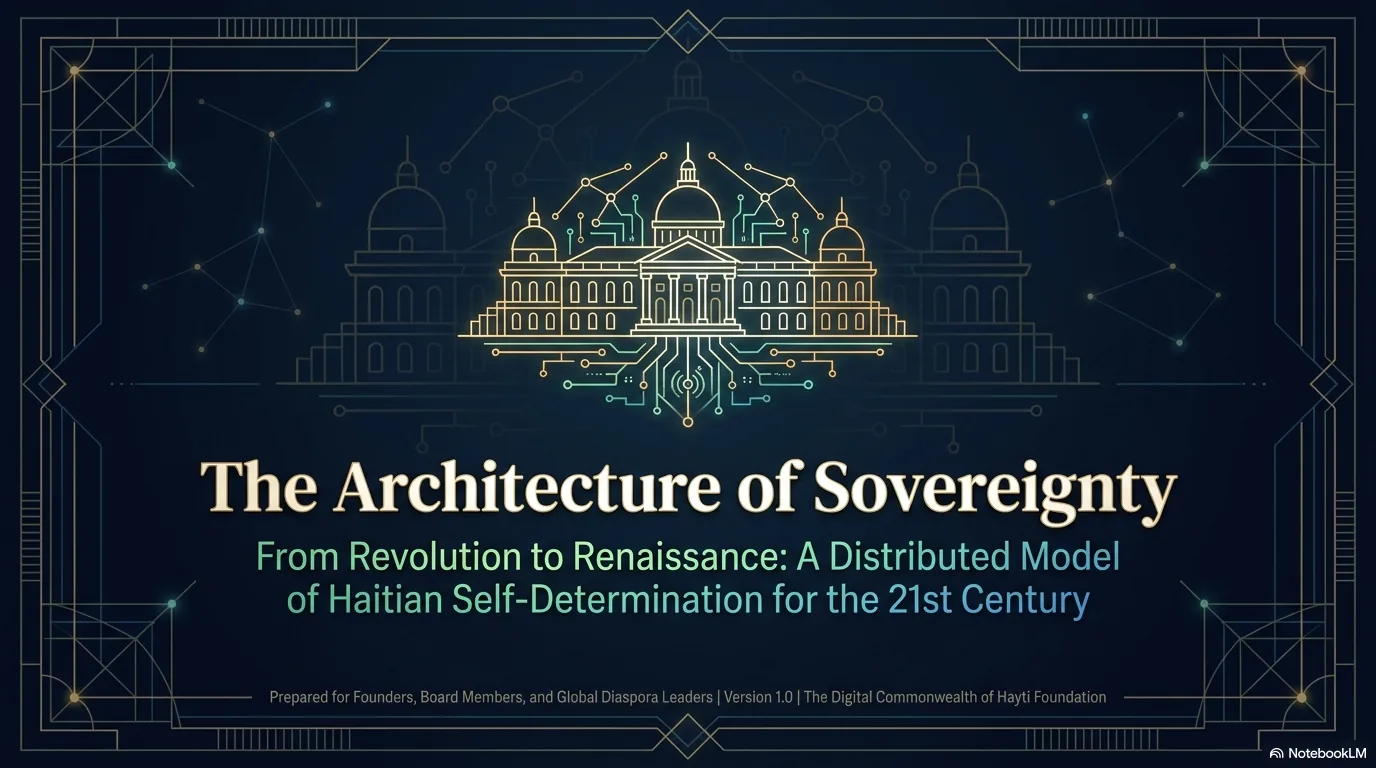
  1. Title slide: The Architecture of Sovereignty — From Revolution to Renaissance, a distributed model of Haitian self-determination for the 21st century.
    Dyapozitiv 1
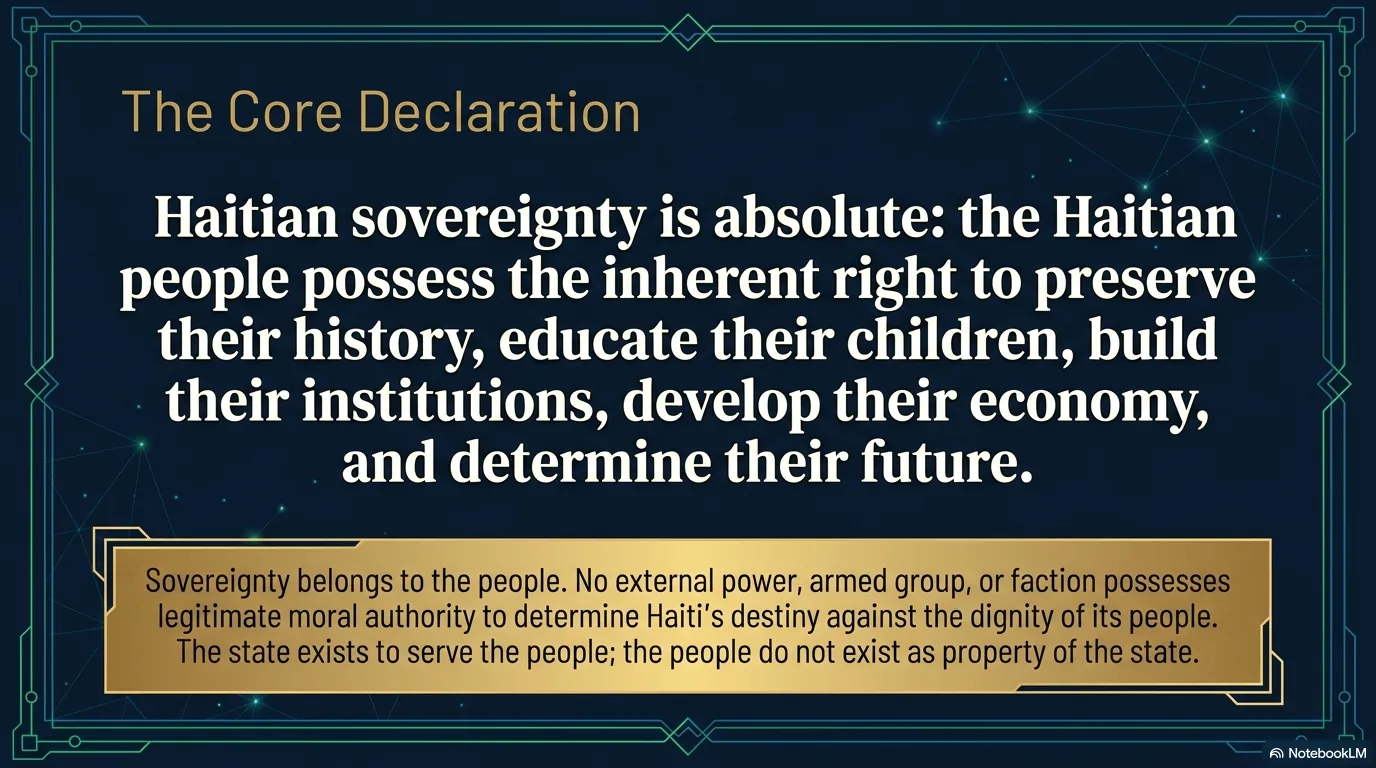
  2. The Core Declaration: Haitian sovereignty is absolute — the Haitian people possess the inherent right to preserve their history, educate their children, build their institutions, develop their economy, and determine their future.
    Dyapozitiv 2
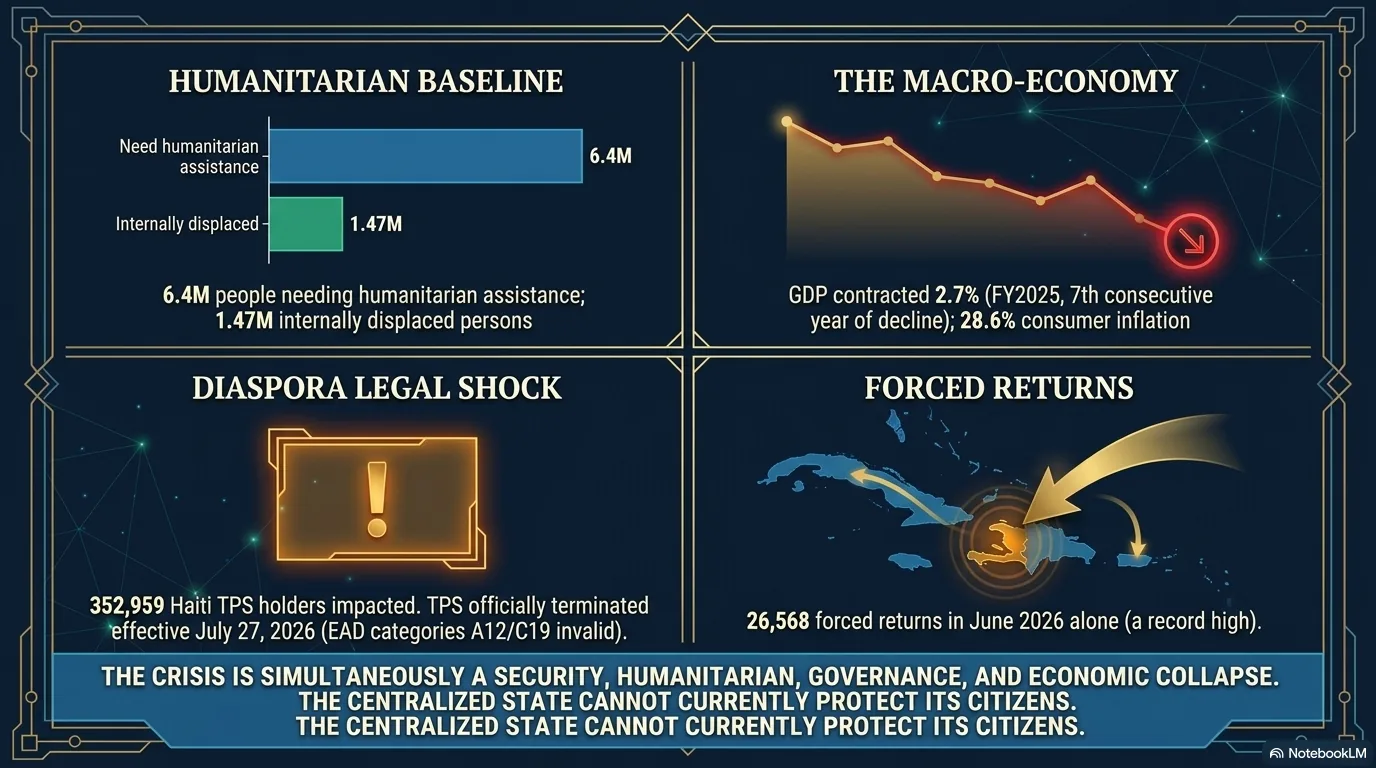
  3. Crisis indicators: 6.4 million people needing humanitarian assistance and 1.47 million internally displaced; GDP contracted 2.7 percent in FY2025 with 28.6 percent inflation; 352,959 Haitian TPS holders affected by the termination effective 27 July 2026; 26,568 forced returns in June 2026.
    Dyapozitiv 3
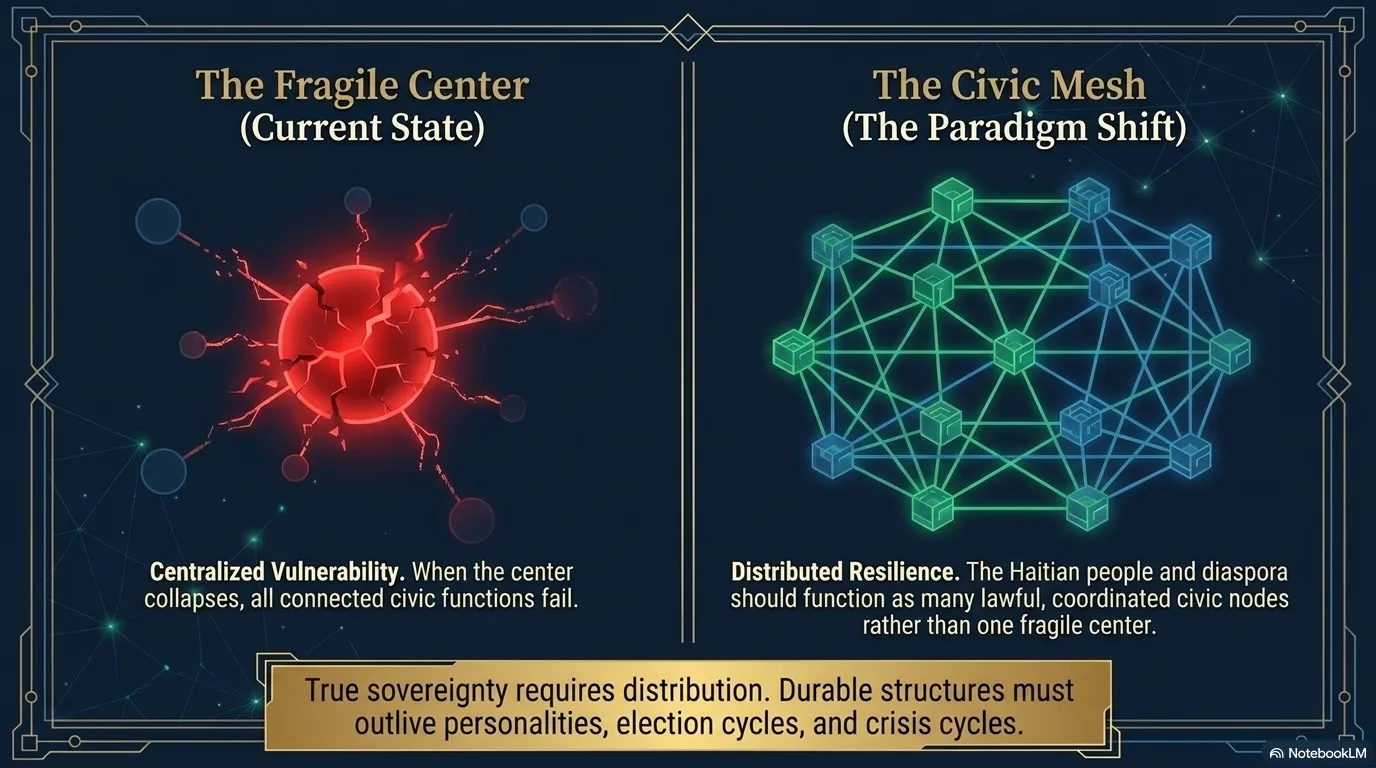
  4. The Fragile Center versus the Civic Mesh: when a single centralized point collapses every civic function fails, whereas the Haitian people and diaspora acting as many lawful coordinated nodes remain resilient.
    Dyapozitiv 4
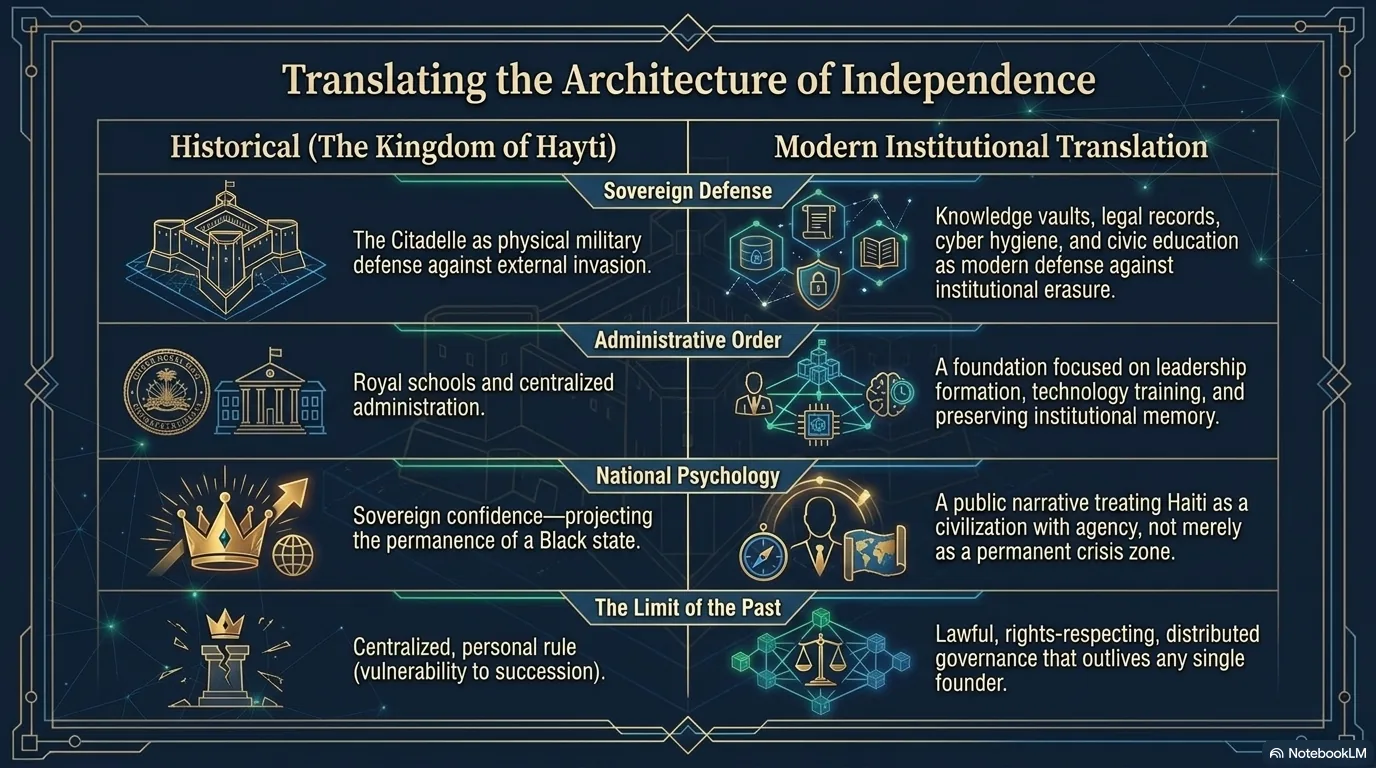
  5. Translating the architecture of independence: the Citadelle as physical defense becomes knowledge vaults and civic education; royal schools become leadership formation; sovereign confidence becomes a public narrative of Haiti as a civilization with agency; centralized personal rule becomes lawful distributed governance.
    Dyapozitiv 5
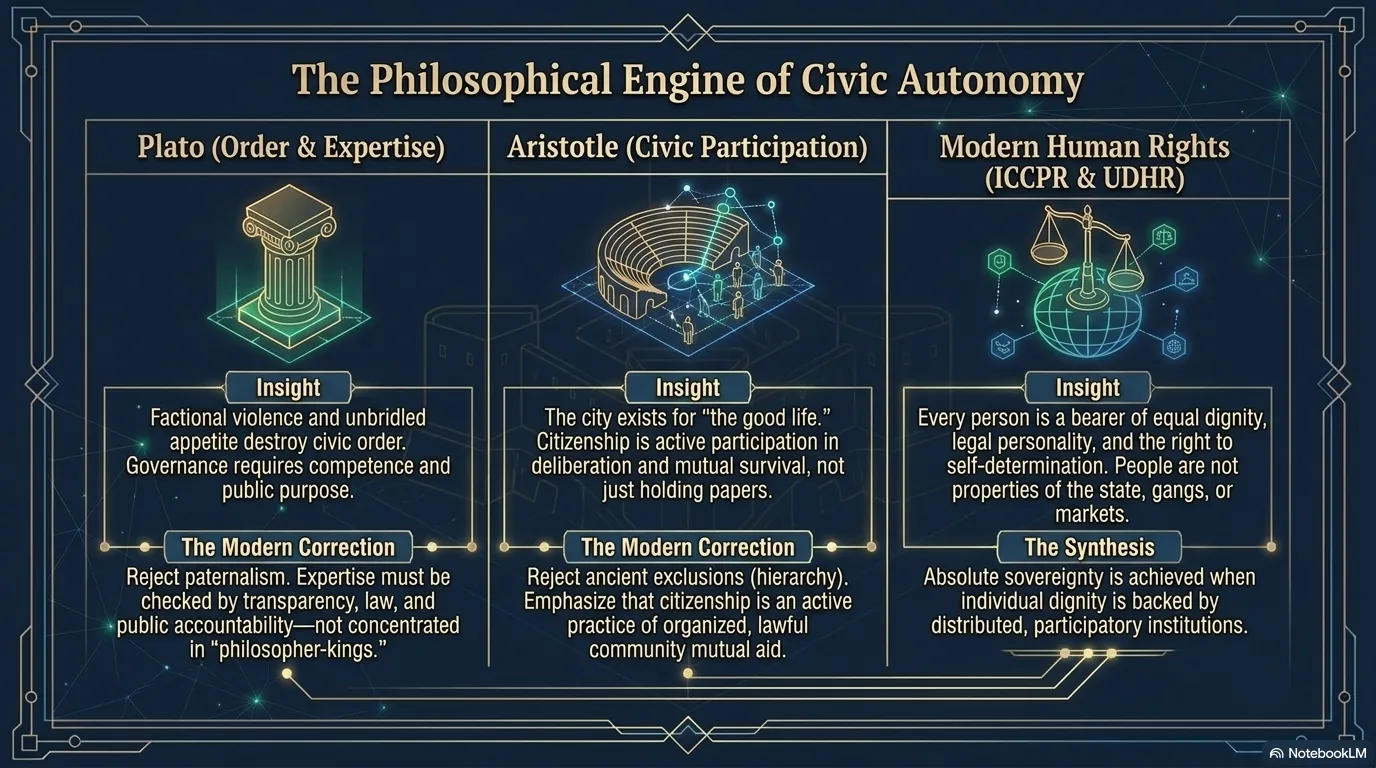
  6. The philosophical engine of civic autonomy: Plato on order and expertise, Aristotle on civic participation, and modern human rights under the ICCPR and UDHR, each with its modern correction, synthesized as absolute sovereignty achieved when individual dignity is backed by distributed participatory institutions.
    Dyapozitiv 6
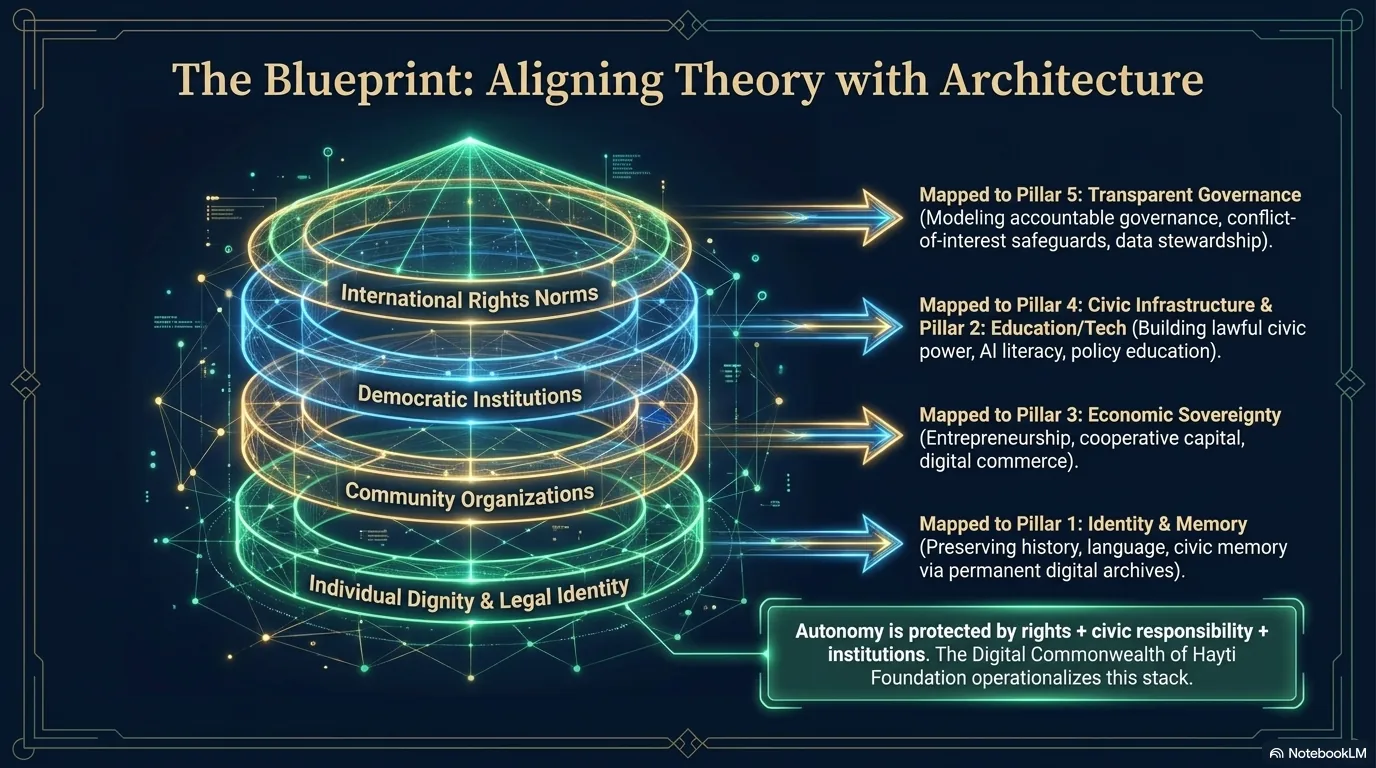
  7. The blueprint aligning theory with architecture: a stack from individual dignity and legal identity, through community organizations and democratic institutions, up to international rights norms — each layer mapped to one of the Foundation's five pillars.
    Dyapozitiv 7
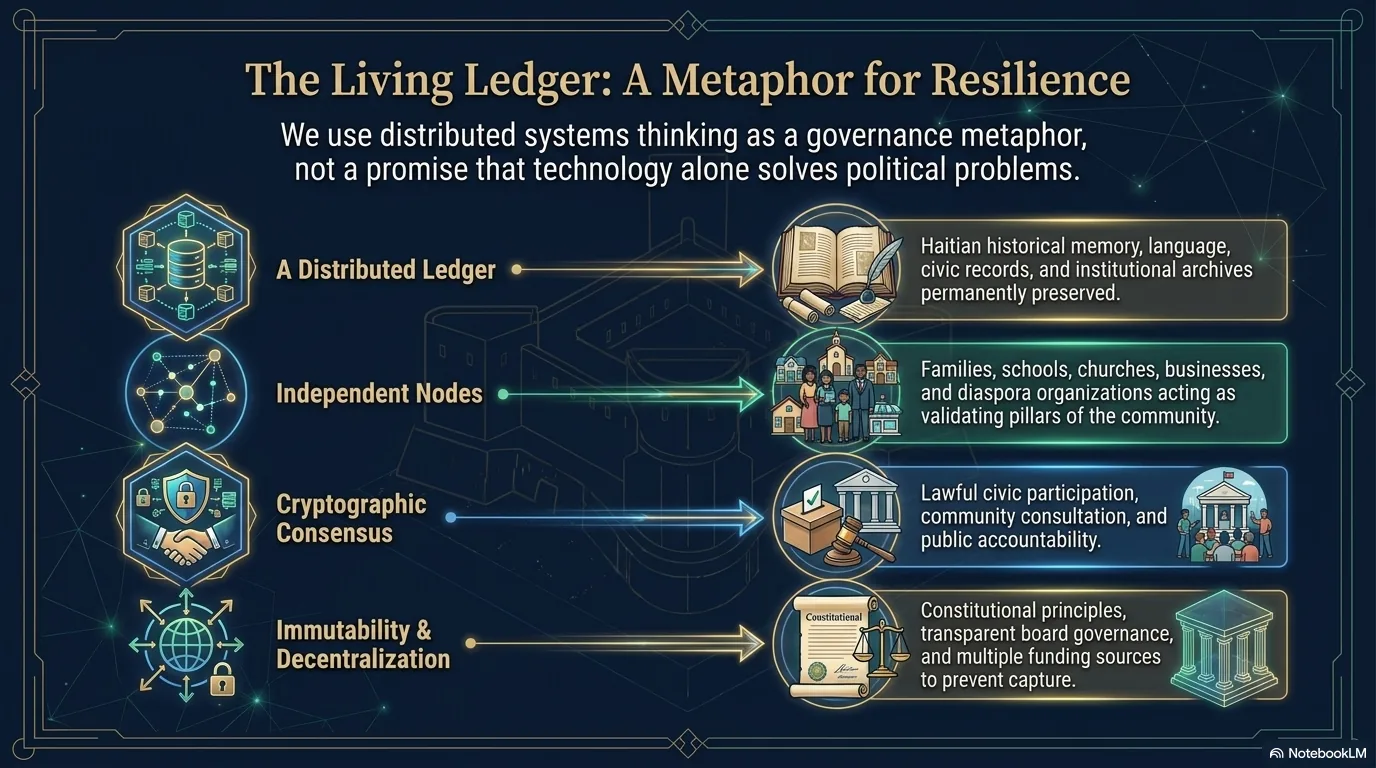
  8. The Living Ledger as a metaphor for resilience: distributed systems thinking used as a governance metaphor, not a promise that technology alone solves political problems. Ledger maps to Haitian memory and archives, nodes to families, schools, churches and diaspora organizations, consensus to lawful civic participation, and decentralization to constitutional principles and multiple funding sources.
    Dyapozitiv 8
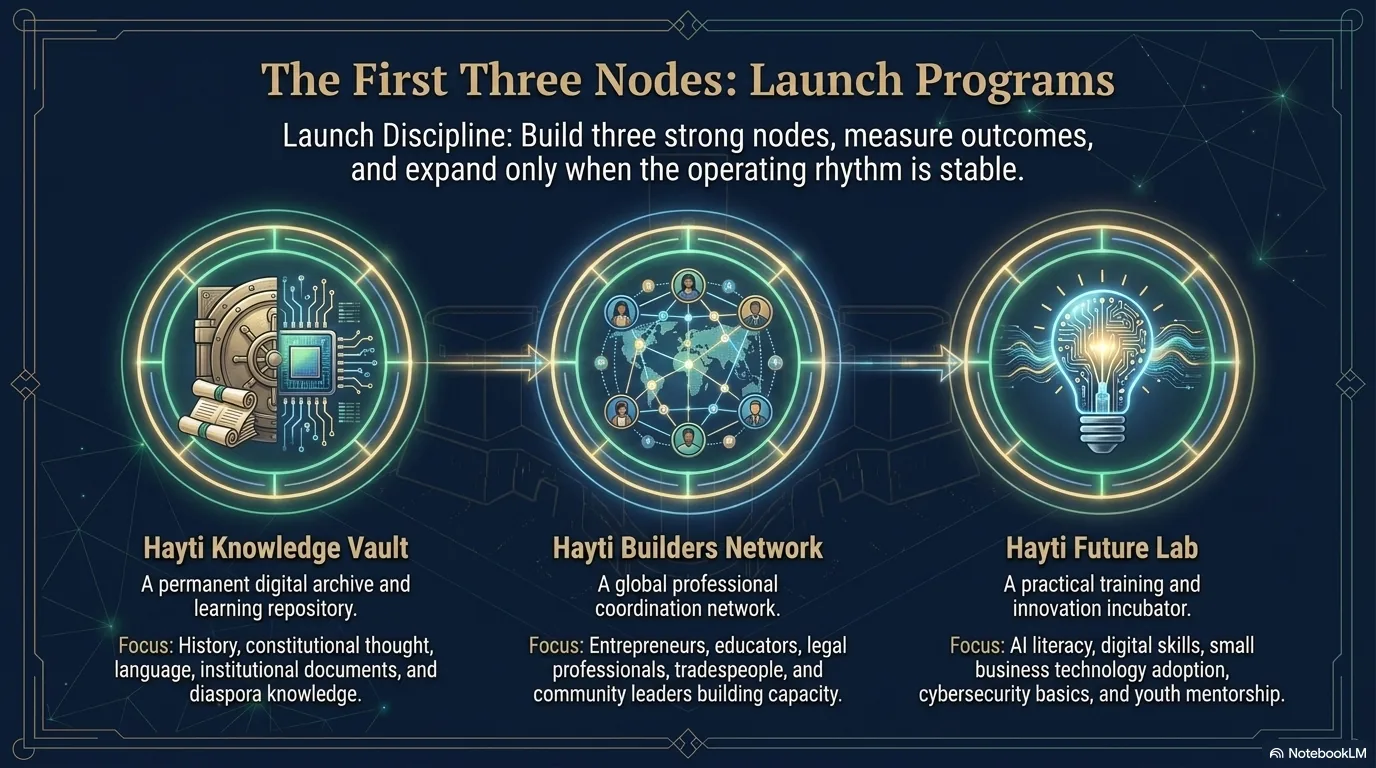
  9. The first three nodes: the Hayti Knowledge Vault as a permanent digital archive, the Hayti Builders Network as a global professional coordination network, and the Hayti Future Lab as a practical training and innovation incubator — building three strong nodes before expanding.
    Dyapozitiv 9
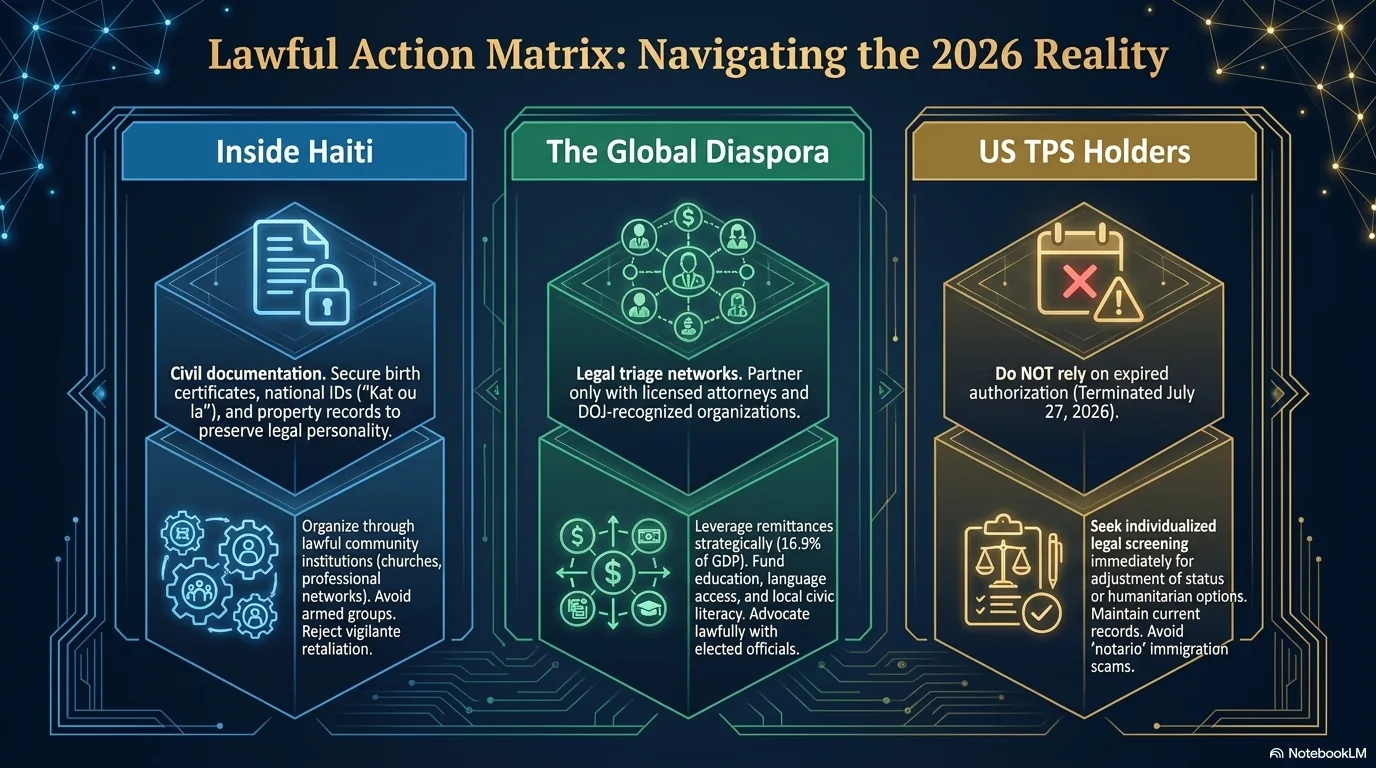
  10. Lawful action matrix for 2026: inside Haiti, secure civil documentation and organize through lawful community institutions; in the global diaspora, use licensed attorneys and DOJ-recognized organizations and leverage remittances for education and civic literacy; for US TPS holders, do not rely on expired authorization, seek individualized legal screening, and avoid notario immigration scams.
    Dyapozitiv 10
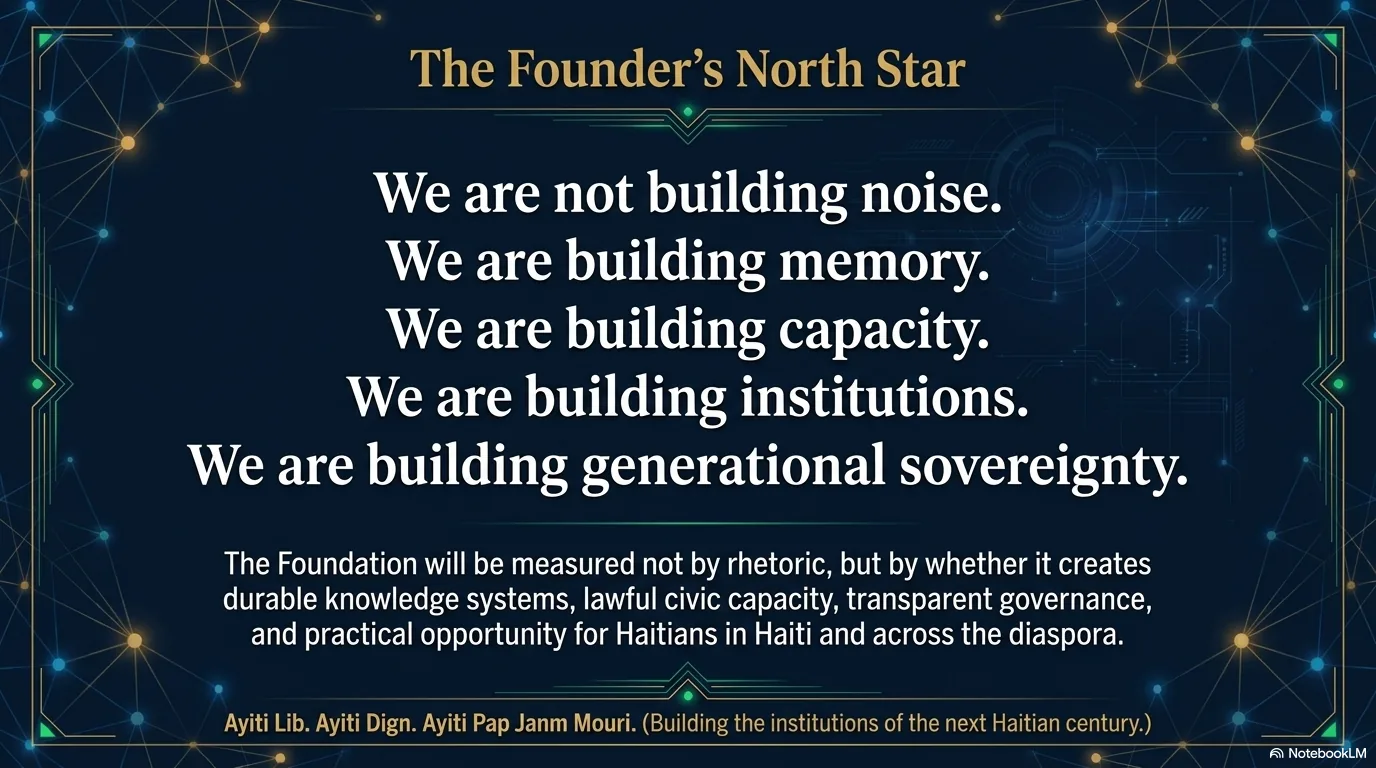
  11. The Founder's North Star: we are not building noise, we are building memory, capacity, institutions, and generational sovereignty — the Foundation measured not by rhetoric but by durable knowledge systems, lawful civic capacity, transparent governance, and practical opportunity.
    Dyapozitiv 13

De dyapozitiv sou estrikti legal anvan enkòporasyon ak kalandriye entèn nou an pa pibliye isit la. N ap pibliye yo lè Fondasyon an fin enkòpore.